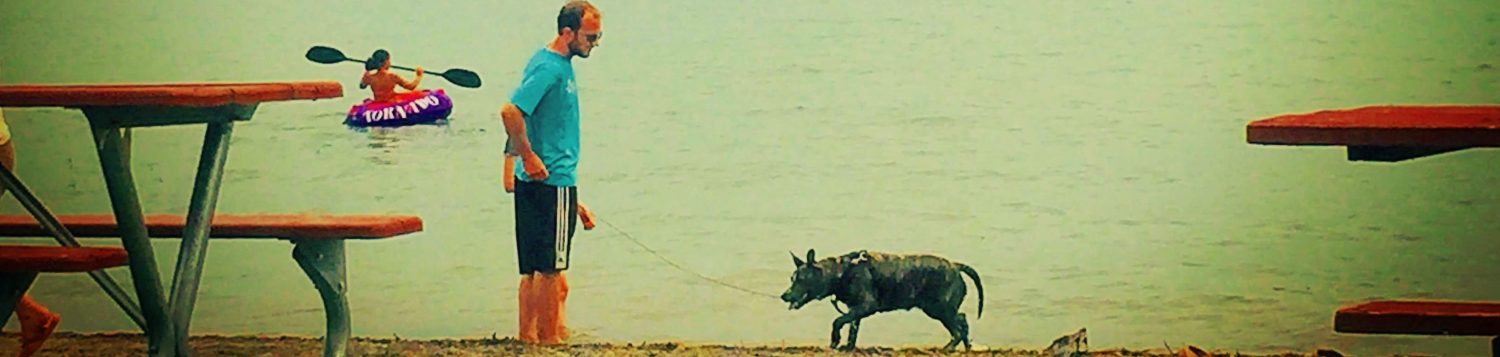

At the end of September, I plan to run the Berlin Marathon. Since I will be over in Europe I decided to make a larger trip of it, and one of the places I decided to go was Croatia, as I’ve never seen the Mediterranean. I had been considering getting scuba certified, and since I was already planning this trip thought, what the hell. Getting your scuba certification is basically a three step process. There is an e-learning/book element, pool sessions, and finally the open water portion. I will be completing step one and step two here in Washington, DC. I will be completing step three in Vrboska, Hvar in Croatia (shown above). I decided to make this an ongoing post to detail my experience as I work my way though the three steps. There are two main scuba certification suppliers: SSI and PADI. I will be going for the Open Water Diver PADI certification. This is purely out of convenience; as far as I can tell there seems to be very little difference between SSI and PADI. They seem pretty interchangeable, but I found a nearby dive shop that provides PADI training, so that’s what I chose. The Open Water Diver certification seems to be the equivalent of diving 101; while Advanced Open Water Diver, a separate course, is the equivalent of diving 102. Then there are a number of speciality and more advanced certifications after that.
Step One – Scuba Orientation and e-Learning
Cost of e-Learning: $190
Options: Book/Video or Online
For step one, I chose the online option. Basically, it comes as a downloadable app for phone/tablet, or you can access through your desktop. I was a little surprised that the UI seems a little clunkier on the desktop. I guess they used to have a separate program for the app and for desktop, but then combined them. And sometimes you can tell. It works fine though, and is fairly straightforward. You watch a video or read a section, and then take a short quiz. At the end, you will need to take a short final exam (haven’t taken it yet but hear its not difficult, and just to ensure you actually looked at the material). After that, you will do an in-person exam. I am making my way though the e-learning portion now. I just want to stress that I don’t believe the exam part is meant to trip anyone up, but just to make sure everyone has a decent understanding before the pool sessions begin. Last weekend, I had my scuba orientation. I am receiving my instruction through Blue Planet. I never realized that there was a scuba shop a few blocks away from me, until I started researching this. When I think of DC, scuba diving does not generally come to mind, but the shop was great. We had orientation downstairs where our instructor explained how the course would work for us. If you are like me and want to travel somewhere, you get a referral at the end of the course; otherwise, you finish the open water section at a lake about an hour and a half away. We covered paperwork, safety, general knowledge, and got to know each other a little bit. I do want to mention that equipment isn’t always listed as a cost, but depending on your program, you might be expected to own some gear: snorkel, scuba mask, fins. I did not pick the cheapest option, but also didn’t go with the most high end, and it ran about $350. I only mention this because that’s not cheap, and the course itself is already expensive. I’m sure there are some cheaper options, but this gear does need to be custom fitted to you which makes it more costly. So far, my experience with the course and Blue Planet has been great. I have already contacted Hvar Divers in Croatia, and have my open water dives reserved. I will write another post soon after the pool dives!
Step Two – Pool Sessions
Cost of Pool Sessions: $300
Options: N/A
Last week were the pool sessions for scuba. I described them to my family as drowning lessons. If you want to know all the things that can go wrong while scuba diving, you will feel satisfied after these lessons. The first thing we learned on arrival was how to rig our equipment. They make you do this continuously, so by the end, you are pretty comfortable with it. These training sessions are long; you will not be able to accomplish much else on the weekend you choose to do them. The training session I did ran from 10am-5pm Sat and Sun. Like I mentioned earlier, most of what you are learning during this time is safety techniques, and what to do in case of emergency. I found this to be more mentally draining than physically draining. I would suggest bringing a water bottle along with your lunch to stay hydrated, and get a good night sleep the night before. For me, the biggest surprise was how much anxiety I got when under water. As someone who has been swimming their entire life, I was not expecting this kind of fear. I continually needed to tell myself that I was in a pool, and I could surface any time if I really needed to. Breathing through the regulator, and being under the water for such a long period of time, just felt so unnatural to me. I kept imagining that I suddenly wouldn’t be able to breathe. It didn’t help that, to learn what to do in an emergency scenario, the instructors shut off your air underwater, so you get a sense of how that feels. When my anxiety was bad, I took long deep breaths to calm myself. I found the second day much more enjoyable. I didn’t feel quite so overwhelmed, and was more comfortable under the water. Hope this helps! Next stop Croatia!
Step Three – Open Water Dive
I will need to finish this post on a later date. Due to a respiratory infection I decided that finishing my certification on my trip was not the best idea. I currently plan to finish in the Spring and will update then.
 My Events
One thought on “Scuba Diving Open Water Certification”