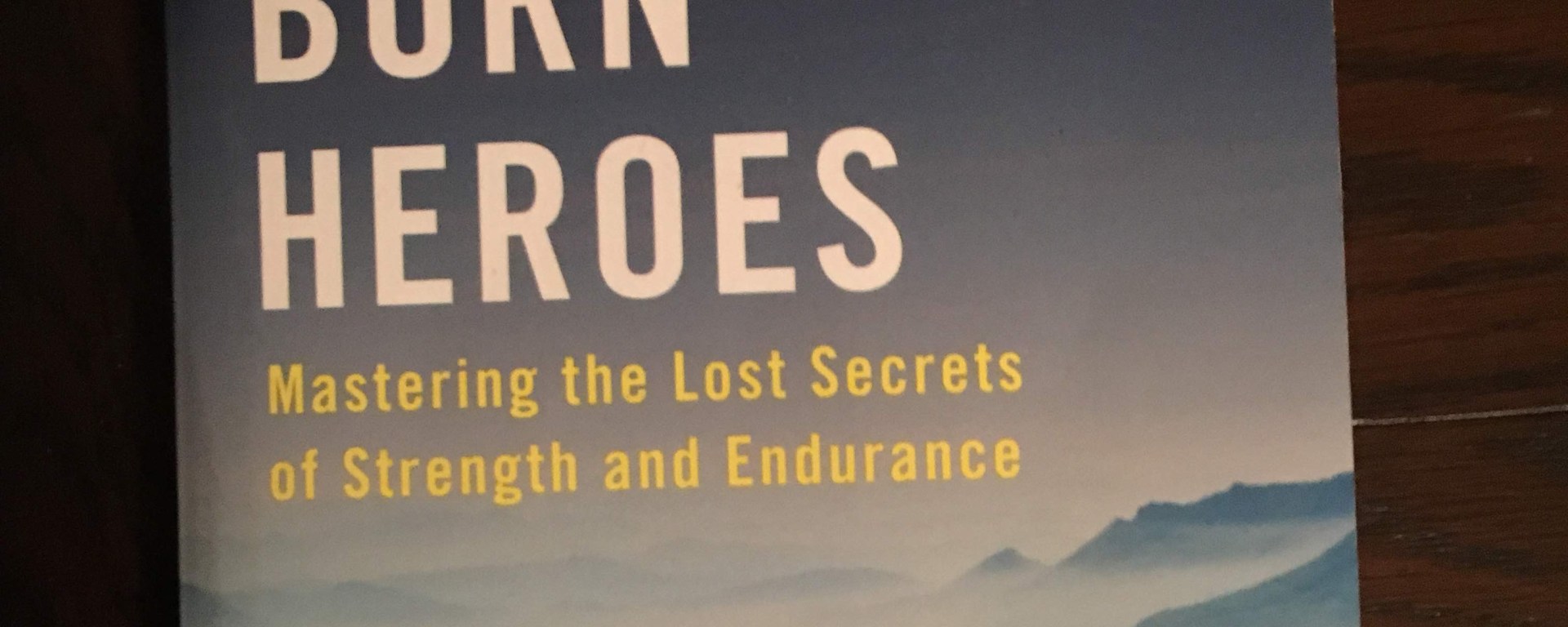
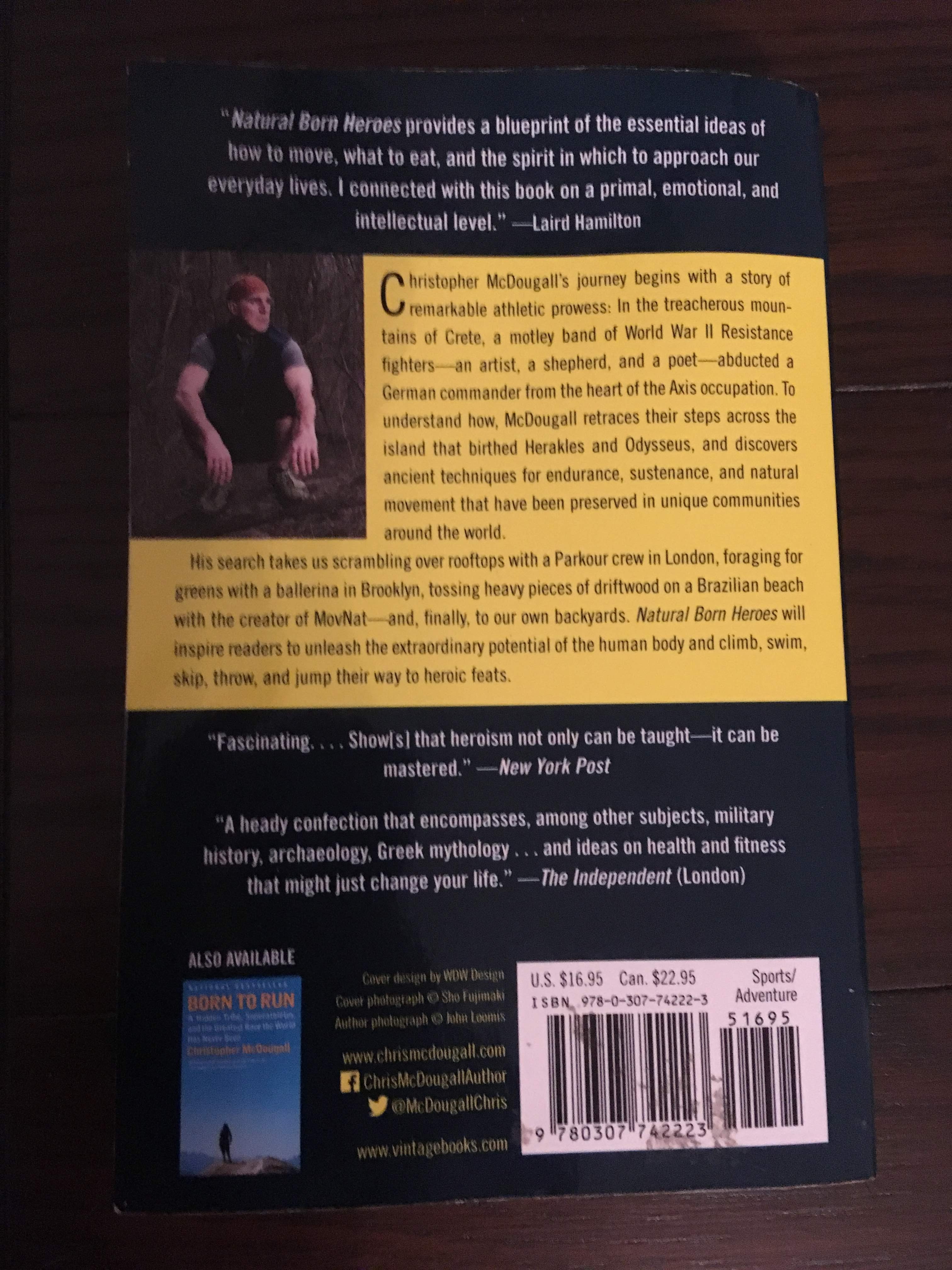
Finally finished Natural Born Heroes. It took me longer than expected. When discussing this book with a friend, they thought I hated it. That is not at all the case. If I dislike a book, I typically will put it down, and do not feel obligated to finish it. There were positives and negatives to this book, and I would like to break them down here.
In my earlier post, when I was only a few chapters into Natural Born Heroes, I said the following concerning the book:
The story centers around the kidnapping of a German General during World War II on the Greek Island of Crete. The mystery surrounding this kidnapping includes tales of extraordinary endurance, but like his previous work, the technical aspects of running serve to add an extra layer to an already intriguing story.
As I continued on to further chapters, this turned out to be only partially true. I almost wanted to go back and rewrite my initial post. I felt that I had missed the main thread of the narrative because, while the story starts off with the mystery concerning the General, the next hundred pages or more never mention the General. Instead, the book gives background on the Island of Crete, Greek mythology, an overview of spy military history, background on resistance fighters on Crete during WWII, and modern day Parkour. Those are not all the subjects covered in this book. There are several more, and that is my main complaint. There is a lot of jumping around through time periods, and too many names to remember. I kept getting lost as to what was happening. Every time I would pick the book up, it took me awhile to get back into it. Some of the subjects I found really interesting, but did not feel that they were ever fully explored. Instead, the next chapter might bring the story in a totally new direction. It was not until I finished, in the Acknowledgement section, that I realized why the story felt so disjointed.
I couldn’t choose between two different book ideas–one about Natural Movement, the other about a crazy wartime adventure on Crete–when my conversations with my daughters about Rick Riordan’s magnificent Percy Jackson series suddenly made me realize the two concepts were the same thing: the art of the hero is the art of natural movement.
I have to disagree. I liked both subject matters, but found jumping between them, as well as consistently changing time periods, confusing. Also, I was more inclined toward the historical portions of the book. Therefore, when a chapter takes place in a Brazilian rain forest, and focuses on the Natural Method during the modern day, I found it distracting.
My other criticism of the book is that, at times, it seemed to be cherry picking from history to support views. The following passage concerning Heinrich Schlieman is an example of this:
So Schliemann treated it like a map, and treasure is what he found. After decades of puzzling over Homer’s description of, for instance, a stone wall just past a windswept fig tree and not far from an icy-cold spring next to a streaming thermal pool, Shliemann finally sleuthed his was not only to the lost city of Troy but to the ruined palace and hidden jewels of Priam, it’s king.
pg. 120
I was really intrigued by this because I was not aware that Troy had ever conclusively been found. Doing my own research (a quick Google search) I discovered that there are many criticisms of Shliemann’s work. The National Geographic Society referred to him as a “con man” and cited him with actually destroying much of the site of Troy. I will not get too into this, but that there are rather major accusations about this man’s work, and none of them are mentioned in this book, I found a little alarming. The history that supports the overall narrative is included, but history that is not so obliging is left out. In fairness to the author, he does include a Notes section at the end of the book, where he cites all of his sources.
By this point, you are probably wondering how I can claim not to hate this book. While I did take issue with certain aspects; overall, I’m still very glad I read it. This is the second book I’ve read by Christopher McDougall and he has a real talent for emphasizing obscure history that might otherwise go unnoticed. When we think of history, we tend to look at the major events: the wars, the battles, the falls of some countries, and the rise of others. In looking at these big picture moments, we miss the more human past of the everyday man. If I had not read this book, I would never have associated Crete with WWII, and would have no idea the role the Island played. From the British operatives that were on the Island, to the Cretan farmers that aided them, I would have remained ignorant of it. As mentioned, it bothered me how quickly this book would change its focus. However, each of the topics covered was fascinating, and I continually Googled different subjects. Any book that presents you with things you find so intriguing, you want to learn more, is not a bad book. I just wish the flow of the story was a little steadier. I would definitely recommend this book to anyone who has an interest in Crete; it sparked one in me. However, if you have never read Christopher McDougall before, I would read Born to Run first, and if you enjoy that, then pick this one up.
Feel free to comment below!
 My Events
What’s up to every one, the contents present at this
site are truly remarkable for people knowledge,
well, keep up the nice work fellows.
LikeLike
Thanks!
LikeLike